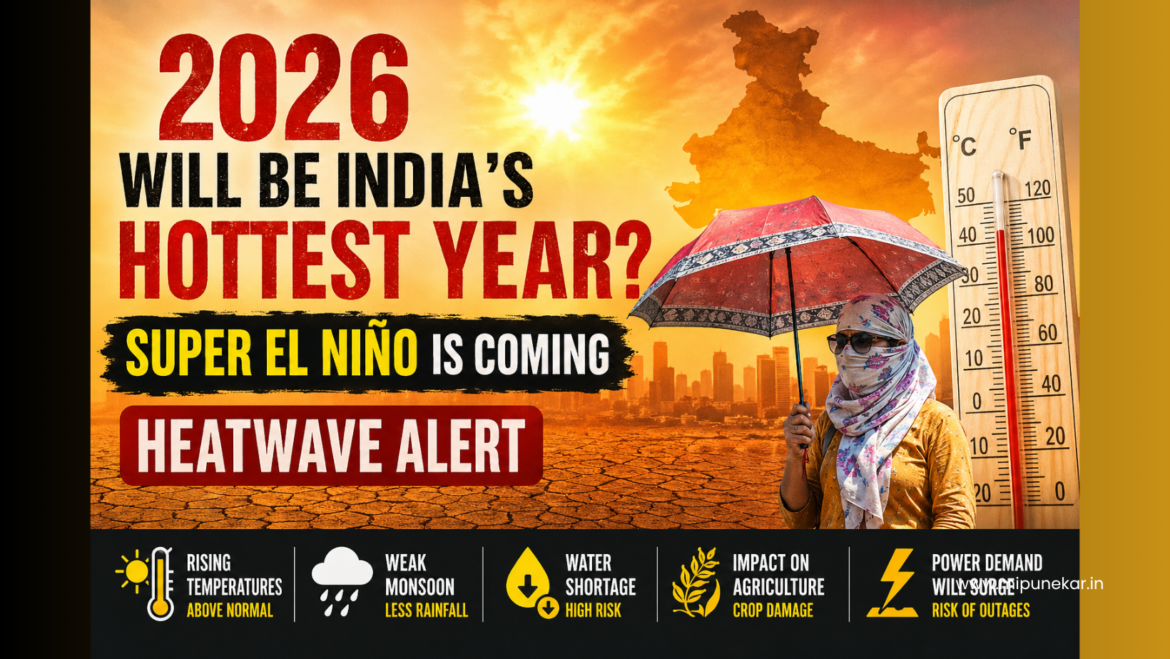
India is already seeing very high temperatures in early 2026, and experts are warning that the situation may get worse in the coming months. Many scientists believe that 2026 could become one of the hottest years ever recorded in India.
The main reason behind this concern is the possible development of a strong or “Super El Niño”. This weather pattern can increase temperatures and reduce rainfall, which leads to heatwaves and drought-like conditions.
What is El Niño and Super El Niño?
El Niño is a climate phenomenon that happens when the Pacific Ocean becomes warmer than normal. This change affects weather across the world, including India.
A Super El Niño is a stronger version of this event. In such cases:
- Ocean temperatures rise significantly
- Global temperatures increase
- Many regions face extreme heat and less rainfall
For India, this usually means hotter summers and weaker monsoon.
Why 2026 Could Be Extremely Hot
Early Heatwaves Already Started
In 2026, heatwaves started earlier than usual. Many parts of North and Central India recorded temperatures above 45°C even in April. This is a clear sign that the summer season is becoming more intense.
Climate Change is Making It Worse
El Niño alone causes warming, but climate change is adding to the problem. Rising global temperatures are making heatwaves longer, stronger, and more dangerous.
Higher Night Temperatures
Another major issue is that nights are not cooling down like before. This makes it difficult for the human body to recover from daytime heat, increasing health risks.
Heatwave Situation in India
At present, several states are facing continuous heatwave conditions. Weather experts have warned that:
- Heatwave days will increase in many regions
- Cities will experience above-normal temperatures
- The summer season may last longer than usual
This means people will have to deal with extreme heat for a longer period.
Impact on Monsoon in 2026
El Niño has a direct effect on India’s monsoon. In 2026, the monsoon is expected to be weaker than normal.
Possible impacts include:
- Less rainfall overall
- Uneven distribution of rain
- Long dry periods between rains
This can create serious problems for farming, water supply, and rural areas.
Major Effects on Daily Life
Health Problems
Extreme heat can cause:
- Heatstroke
- Dehydration
- Fatigue and weakness
Children, elderly people, and outdoor workers are at higher risk.
Agriculture Impact
Low rainfall and high temperatures can damage crops. This may affect food production and increase pressure on farmers.
Increase in Electricity Demand
As temperatures rise, more people use air conditioners and coolers. This increases electricity demand and can lead to power shortages.
Water Shortage
Less rainfall and higher usage can reduce water levels in reservoirs, leading to water problems in cities and villages.
Why This Situation is Serious
India is already one of the most climate-sensitive countries. With rapid urbanisation, pollution, and rising temperatures, extreme weather events are becoming more common.
Heatwaves are now:
- Starting earlier
- Lasting longer
- Becoming more intense
This makes 2026 a critical year in terms of climate impact.
How to Stay Safe During Heatwave
To protect yourself from extreme heat:
- Avoid going out between 12 PM and 4 PM
- Drink plenty of water throughout the day
- Wear light and loose cotton clothes
- Eat fresh fruits and avoid heavy meals
- Take rest if you feel tired or dizzy
Following these simple steps can help reduce health risks.
Final Conclusion
Based on current weather patterns and scientific predictions, 2026 has a strong possibility of becoming one of the hottest years in India.
The combination of Super El Niño and climate change is creating a serious situation. While it is difficult to say if it will be the absolute hottest year, the risk of extreme heat is very high.
India needs to stay prepared for intense heatwaves, possible weak monsoon, and their impact on daily life.