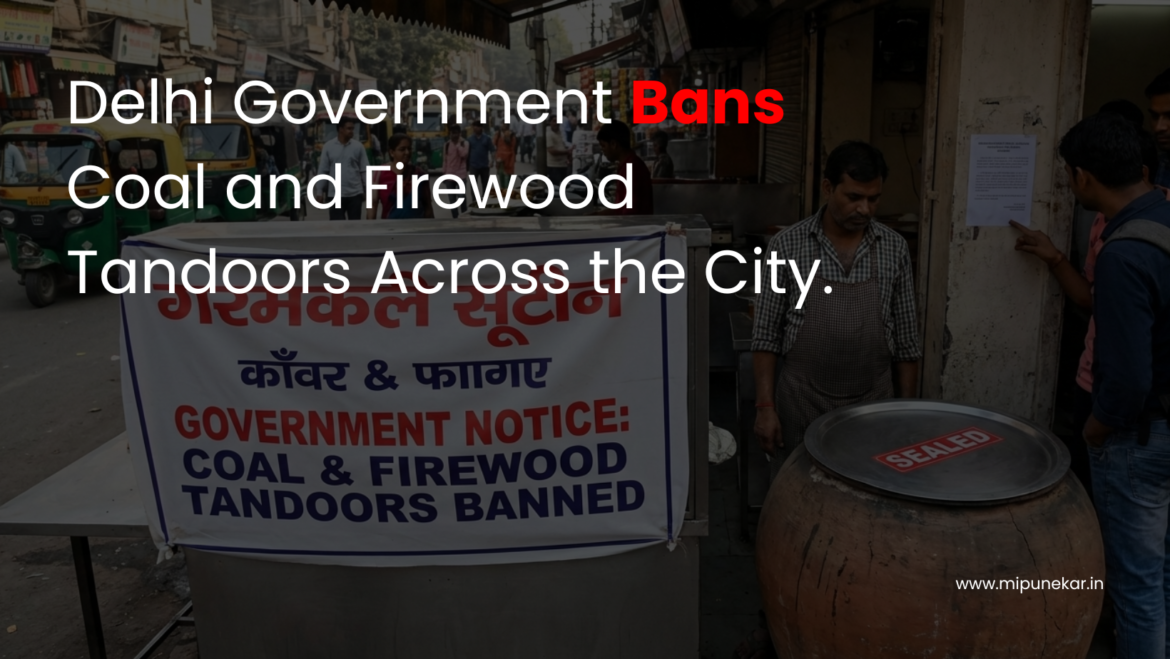
Coal & Firewood Tandoors Banned in Hotels, Restaurants, and Roadside Food Outlets in Delhi
In a major step towards reducing air pollution, the Delhi government has announced a complete ban on the use of coal and firewood-based tandoors in hotels, restaurants, dhabas, and roadside food outlets across the national capital.
The decision is part of Delhi’s long-term clean air action plan aimed at improving air quality and protecting public health, especially during peak pollution seasons.
What Is Banned?
As per the government’s directive:
- Coal-based tandoors
- Firewood (wood-fuelled) tandoors
will no longer be allowed in any food establishment operating within Delhi, including:
- Hotels
- Restaurants
- Roadside eateries
- Dhabas
- Street food stalls using traditional tandoors
Why Has This Ban Been Implemented?
Coal and firewood are known to be highly polluting fuels. When burned in open or semi-closed cooking systems like tandoors, they release:
- Fine particulate matter (PM2.5 & PM10)
- Carbon monoxide
- Harmful gases affecting lungs and heart health
Officials have stated that commercial cooking using solid fuels is a significant contributor to local air pollution, especially in congested areas.
This ban aligns with Delhi’s broader efforts to:
- Control pollution at the source
- Improve urban air quality
- Promote cleaner and sustainable cooking alternatives
What Are the Allowed Alternatives?
Food businesses are being encouraged to shift to cleaner fuel options, such as:
- PNG (Piped Natural Gas)
- CNG-based cooking systems
- Electric tandoors
- Other approved eco-friendly technologies
Authorities have indicated that technical guidance may be provided to help businesses transition smoothly.
Action Against Violators
The government has made it clear that:
- Regular inspections will be conducted
- Strict action will be taken against violators
- Penalties and possible closure may be imposed on outlets that fail to comply
Local municipal bodies and pollution control authorities will be responsible for enforcement.
Impact on Food Businesses
While the move is environmentally important, it may pose short-term challenges for small eateries and street vendors due to conversion costs. However, experts believe that in the long run:
- Cleaner fuel reduces health risks for workers
- Operating costs may stabilise
- Businesses contribute to a healthier city
Many restaurant owners have welcomed the decision, calling it a necessary step for Delhi’s future.
A Step Towards Cleaner Delhi
The ban on coal and firewood tandoors marks another strong policy move by the Delhi government to fight air pollution at the grassroots level. With cooperation from businesses and citizens, the initiative is expected to bring visible improvement in local air quality in the coming years.